
Rush Royale: Tower Defense TD
MYGAMES MENA FZ LLCStrategy
4.323.16K Reviews
- Version
- 37.1.135180
- Installs
- 50.00M
- Age Rating
- Teen
Screenshots
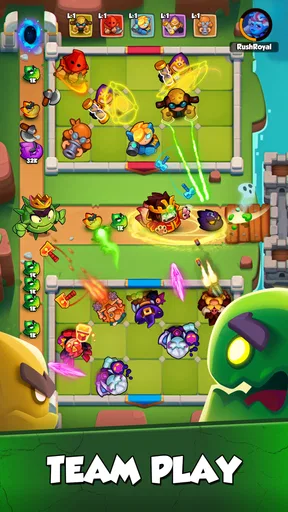
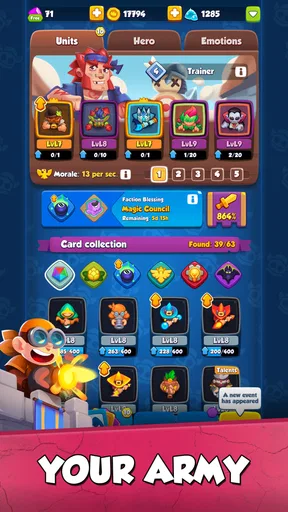
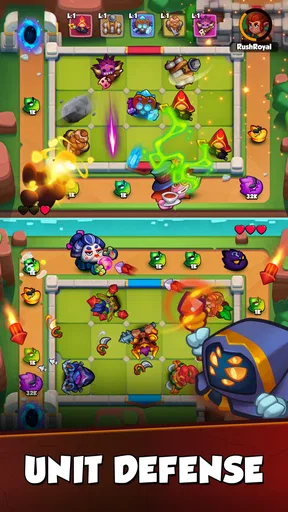
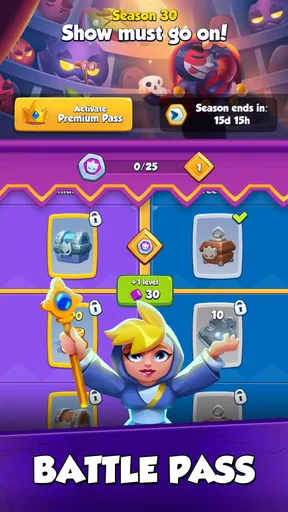
Our Review of Rush Royale: Tower Defense TD
 Analysis by Appyee
I approached Rush Royale: Tower Defense TD as a first-time player looking for a strategy game that could make a short break feel engaging rather than demanding. Its appeal is easy to grasp: you build a defense from a changing set of units, then make quick choices as enemies advance. The real draw is how much those choices matter. A match asks you to balance a crowded board, limited resources, and the chance that your next move will make your setup stronger—or less useful than it was a moment ago.
This is a free strategy game from MYGAMES MENA FZ LLC, with a Teen content rating. It has a 4.3 average from around 762,000 ratings and over 50 million installs, so it has clearly found a sizeable audience. That popularity is useful context, but it doesn’t mean every player will enjoy its particular mix of tower defense and random unit outcomes. I’d describe it as a game for people who like adapting their plan while a round is already underway, not for someone who wants complete control over every piece of a carefully laid-out defense.
What the first matches are really like
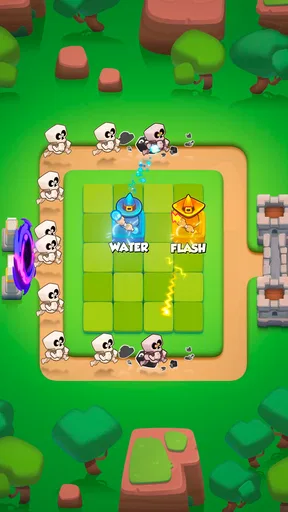
The opening is approachable, but the game’s simple goal can disguise a busy decision loop. You place units, spend mana to add more, and merge identical ones to create stronger versions. Meanwhile, enemies keep moving, so there is no long pause to redesign the whole board. The satisfying moments come when a merge improves your damage at just the right time; the frustrating ones come when the units you need are not the ones you can immediately make use of.
That uncertainty is central to the experience, not a small obstacle that disappears once you learn the controls. In a conventional tower-defense game, I usually choose where each defense goes and can build around a fairly stable plan. Here, I have to make the best of the units that appear, decide whether to keep a useful formation or merge it, and leave room for the next draw. If you enjoy improvising under pressure, that creates tension. If you want every loss to feel completely attributable to a tactical mistake, the random element may wear on you.
Getting through setup without overthinking it
The tutorial makes a sensible first step because it gives you a chance to learn the basic rhythm before you start worrying about elaborate combinations. I’d pay attention to what each action does rather than trying to memorize every card at once. Focus first on placing units, watching mana, and recognizing which pieces can merge. When a match ends, take a moment to connect the result to one or two decisions you made instead of changing everything in your approach at the same time.
Early on, it is tempting to spend mana as soon as it becomes available. I found it more helpful to treat that resource as a choice: adding another unit may help cover the board, while waiting can leave flexibility for a more useful move. There is no universal answer, since the board and the approaching enemies matter, but pausing for a beat before spending keeps the match from becoming a string of reflex taps. This is a small habit that makes the game’s strategy easier to see.
The same goes for merging. A stronger unit sounds like an obvious improvement, yet merging also changes the shape of your board and can remove a piece that was contributing useful coverage. I try to ask whether the merge solves a real problem—such as needing more power in a key spot—or whether I’m doing it just because I can. Keeping that question in mind makes losses more informative and helps a new player understand why a board that looks stronger on paper may still struggle.
Learning the rhythm of a match
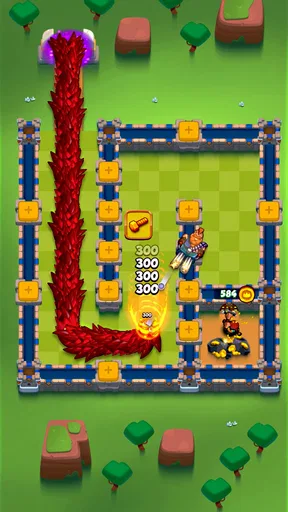
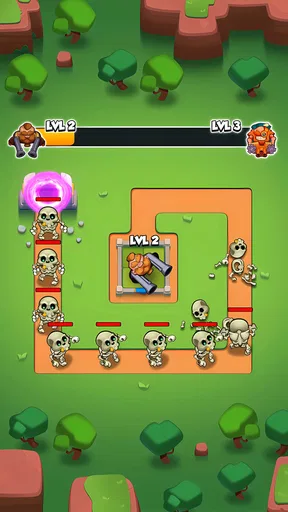
When you first dive into Rush Royale: Tower Defense TD, you’re greeted with a friendly tutorial that guides you through the basics. The game combines elements of tower defense with a card-based system. You collect and upgrade different units, each with unique abilities, to fend off waves of enemies. The concept might sound familiar, but the execution is surprisingly fresh.
The game kicks off with a straightforward interface. You’ll start with a small deck of cards, each representing a different unit or spell. As you progress, you’ll unlock more cards, adding depth and strategy to your battles. The graphics are colorful and vibrant, making every match visually engaging.
Gameplay and Strategy
Alright, let’s talk strategy. The goal is to defend your base from waves of enemies using your deck of cards. Each card costs mana to play, and you gain mana over time, so timing and resource management are key. You can merge identical units to form stronger versions, which adds a cool twist to the traditional tower defense formula.
One thing I love is how the game keeps you on your toes. You never know what kind of enemy or boss might show up, and some require specific strategies to defeat. This keeps the gameplay dynamic and challenging, and I found myself constantly tweaking my deck to find the perfect combination of units.
Knowing when to adjust your plan
For a first-time player, a useful way to make progress is to change one part of your deck or play approach at a time. If you keep losing to a particular stretch of a match, note whether your problem was low damage, a board that became awkward to manage, or waiting too long to spend mana. Then try one adjustment and see what changes. This is more practical than chasing an imagined perfect deck before you have enough experience to know what your own weak point is.
There is also a trade-off between building a board that feels immediately powerful and keeping it adaptable. Filling space quickly can help you cover more of the fight, but it can leave fewer options when you want to merge or respond to a change in pressure. Conversely, holding back for an ideal arrangement can leave you short on strength while enemies continue advancing. I don’t treat either approach as a rule; the useful skill is noticing when the current board needs coverage and when it needs a more deliberate upgrade.
A realistic way to fit the game into a day is to play a match while waiting for a coffee or winding down after a task, then stop and think about one decision before starting another. That short review can be more valuable than immediately queuing again on autopilot. If I lost because I spent too freely, I can test a more patient opening next time. If the board had enough units but still lacked damage, I can reconsider the deck instead of simply placing faster. The game works for brief sessions, but its competitive pull can make “one more” easy to turn into a longer run.
Multiplayer Mayhem
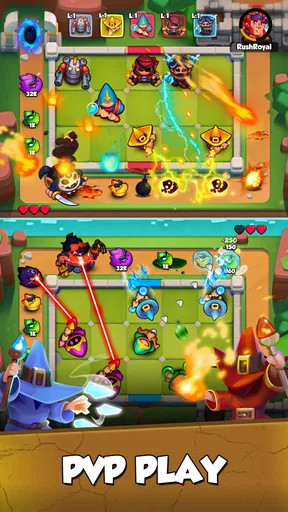
If you’re competitive like me, you’ll appreciate the multiplayer aspect. You can battle against other players in real-time, which is both exhilarating and nerve-wracking. Winning matches earns you trophies and rewards, which you can use to unlock and upgrade more cards. The matchmaking is pretty smooth, and I didn’t experience any major lags or disconnects during my play sessions.
The PvP battles add a whole new layer of strategy. Since you’re up against real human opponents, you have to be quick on your feet and adapt to their tactics. It’s a thrilling experience that had me coming back for more.
Who will enjoy it—and who may not
I’d recommend it to players who like compact strategy rounds, collecting units, and making decisions with imperfect information. It is also a good fit if you enjoy the pressure of seeing another player’s progress unfold alongside your own. The board gives you enough to think about without requiring the slow, deliberate placement of a large traditional tower-defense map, so it can suit someone who wants a more active match on a phone.
I would steer away from it if random outcomes routinely feel unfair to you, or if you prefer a campaign where you can pause, study a fixed map, and execute a carefully planned build. Compared with more conventional tower-defense games, this one trades precise placement and predictable construction for unit collection, merging, and adaptation. Compared with a straightforward card battler, the moving enemy pressure makes your choices feel more immediate. Neither style is automatically better; the right pick depends on whether you want to plan calmly or improvise while the clock is effectively ticking.
One practical point for new players is not to judge the whole game by a single unlucky board. At the same time, don’t dismiss repeated frustration as something you must simply tolerate. If you find that the uncertainty is the part you dislike, a more deterministic defense game may be a better use of your time. If the uncertainty makes you curious about how a different deck or sequence might work, that is a sign the core loop is doing its job for you.
How multiplayer changes the experience
Player-versus-player matches make the game more than a personal puzzle. You are not only trying to keep your own defense effective; you are also reacting to the fact that someone else is managing a board at the same time. That raises the stakes of small decisions and makes a win feel earned, but it can also make a loss sting more than a quiet solo attempt. I’d start with the mode that feels comfortable and treat early competitive matches as practice in reading the pace, rather than as a verdict on whether you are good at the game.
When a match goes badly, it is tempting to blame the opponent’s stronger units or assume that you need to collect more before you can compete. Sometimes progression does matter, but the more useful first check is whether you spent resources with a clear purpose and whether you merged at a sensible moment. That keeps the learning process within your control. It also stops the trophy chase from becoming the only reason to play, which matters if you want the game to remain enjoyable rather than feel like another task on a daily list.
Costs, progression, and realistic expectations
Now, let’s talk about the elephant in the room: in-app purchases. Like many free-to-play games, Rush Royale offers a variety of in-game purchases. You can buy chests, which contain cards and resources, or invest in the premium pass for extra rewards. However, I found that you can still enjoy the game without spending a dime, though it might take a bit longer to progress.
Its in-app purchases range from $0.99 to $169.99 per item, so I would treat optional spending as something to decide on deliberately rather than as a shortcut to take impulsively after a frustrating match. You can install it for free, but “free to start” and “no pressure to spend” are different things in a progression-focused game. If you are trying it casually, set your own boundary before opening purchase offers, and judge whether you still enjoy the matches at your natural pace.
The game does a good job of rewarding players through regular events and daily challenges, keeping the experience fresh and engaging. Plus, there’s a sense of satisfaction in earning upgrades through sheer determination and skill.
Progression can make the early experience feel like a series of small goals: learn the units you have, earn upgrades, and gradually understand what fits your style. I’d avoid treating every new card as an automatic improvement to your deck. A unit is only useful if it works with the way you manage the board, and swapping too many pieces at once makes it harder to tell why a strategy succeeds or fails. Build familiarity before making constant changes; that gives each unlock a clearer purpose.
The current version is 35.0.125470, and the game supports Android 7.0 and later. It has been available since October 26, 2020, which helps explain why there is a developed collection-and-progression loop rather than a bare tutorial followed by a few isolated matches. Before installing, I’d also consider whether you want an ongoing game with unlocks to work toward or just a self-contained strategy challenge. This is much closer to the former, and that long-term structure is part of both its appeal and its potential time commitment.
Final Thoughts
Overall, Rush Royale: Tower Defense TD is a captivating blend of strategy and action. The combination of tower defense mechanics with card collecting keeps the gameplay fresh, and the vibrant graphics make it a joy to play. Whether you’re a casual gamer or a strategy enthusiast, there’s something here for everyone.
So, if you’re looking for a new game to sink your teeth into, give Rush Royale a try. It’s perfect for those quick gaming sessions or for losing yourself in a marathon of strategic battles. Happy defending!
Verdict
Strengths of Rush Royale: Tower Defense TD
- Engaging gameplay with strategic depth.
- Frequent updates keep content fresh.
- Unique blend of tower defense and card game.
- Smooth performance on most devices.
- Active community for multiplayer engagement.
Limitations of Rush Royale: Tower Defense TD
- Progress can be slow without purchases.
- Some features locked behind paywalls.
- Occasional matchmaking imbalances.
- Requires constant internet connection.
- Ads can be intrusive at times.
Other Releases by MYGAMES MENA FZ LLC
View All
War Robots Multiplayer Battles
Action4.3
Similar Picks in This Category
View All
Clash of Clans
Supercell4.5

Plants vs. Zombies™
ELECTRONIC ARTS3.7

Lords Mobile: Kingdom Wars
IGG.COM4.5

Clash Royale
Supercell4.4

State.io — Conquer the World
CASUAL AZUR GAMES4.1

Car Driving School : Car Games
Spark Game Studios3.9
Frequently Asked Questions
What is the main objective of Rush Royale: Tower Defense TD?
Rush Royale: Tower Defense TD is a strategic game where the main objective is to defend your base from waves of enemies using a variety of towers and heroes. Players must strategically place their defenses and upgrade them to withstand increasingly challenging levels. Combining elements of strategy and randomness, it offers a unique twist on traditional tower defense games.
Is Rush Royale: Tower Defense TD free to play?
Yes, Rush Royale: Tower Defense TD is free to download and play. However, it includes in-app purchases that can enhance gameplay, such as purchasing additional resources, heroes, or upgrades. While these purchases are optional, they can provide advantages and may be necessary for progressing through more difficult levels.
What kind of multiplayer options are available in Rush Royale?
Rush Royale offers both cooperative and competitive multiplayer modes. In co-op mode, players can team up with friends to tackle challenging levels together, sharing strategies and resources. In competitive mode, players face off against each other to see who can survive longer, adding a layer of excitement and challenge to the game.
How often does the game receive updates and new content?
The developers of Rush Royale frequently update the game with new content, including new heroes, towers, and levels. Regular updates ensure that the game remains fresh and engaging, addressing any bugs and balancing issues to enhance the overall player experience. Players can expect seasonal events and special challenges as well.
What devices are compatible with Rush Royale: Tower Defense TD?
Rush Royale: Tower Defense TD is available on both Android and iOS devices. It requires a minimum operating system version, typically Android 5.0 or iOS 10.0, for optimal performance. Players should check the app store listing for specific device compatibility and ensure their device meets the necessary requirements for smooth gameplay.
Play our best games!


